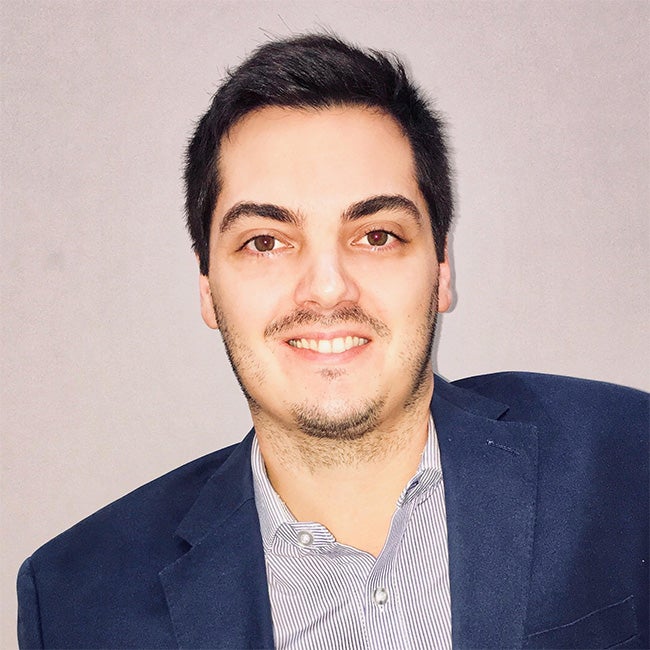
What are your primary job responsibilities?
I manage technology delivery teams and work as a functional expert to drive digital transformation/enable emerging technologies for top-tier global insurers.
Why did you choose the MS-RMI Program at FSU?
The RMI program at FSU is consistently ranked as a top-tier program with elite, but hands-on, professors. The program sells itself, but as an added bonus it gave me the flexibility to continue consulting while studying.
How did your graduate education help shape your professional experiences?
On a day-to-day basis, I work with executives and senior underwriters who have been in the industry for decades. There's no way to "fake" my insurance knowledge with these professionals. The program at FSU is more comprehensive than the industry standard CPCU program and gave me the expertise and confidence I need to hold conversations with industry veterans.
How has working in your industry changed the way you look at the world?
I work in the fast-paced world of technology – InsurTech to be exact. If I've learned one thing, it is that there will be rapid transformation over the coming decade within the insurance ecosystem and the world at large. The challenge of innovating to remain competitive while promoting sustainability will be the main driver of growth for insurers and the broader economy. Given the reach of the insurance industry and the aforementioned challenges, this industry has provided me with purpose and the knowledge that the work I am doing will help millions around the world.
How have you stayed connected to the FSU MS-RMI Program?
I am in contact with various professors who are still gracious enough to give advice on real world problems four years after graduating.
What advice would you give yourself in college?
I would tell myself to focus – even if a course is uninteresting. The work you do now impacts the doors that open to you in the future.
What is your favorite source for keeping up with industry news?
I follow Insurance Innovation Reporter for news specific to InsurTechs and incumbent insurer technology developments. I also follow WSJ and the Economist, that often have in-depth insurance pieces.
What's the one thing you couldn't do without at work?
I couldn't work without my AirPods and three monitors. Pre-COVID, I used to travel and only had a tiny laptop. In retrospect, I'm not sure how I survived on just one 14-inch screen.
If you were tasked with designing a new course at FSU for all students to take, what would it be? What books/articles would you assign?
I would create an insurance technology and digital innovation course. It would cover the organizing logic of technology delivery teams, platform business models, and how to mobilize existing and emerging technologies to improve insurer operations and finances. I would also require an innovation week, which teams would go from zero to prototype to solve emerging problems in the insurance industry. Required reading would be: Sprint by Jake Knapp, The Future is Faster than you Think by Peter Diamandis and Steven Kotler, The InsurTech Book by Sabine L. B. VanderLinden and Platform Revolution by Geoffrey G. Parker, Marshall W. Van Alstyne and Sangeet Paul Choudary. I always tell people that if they want to work with the latest tech, they need to join insurance, not Google.